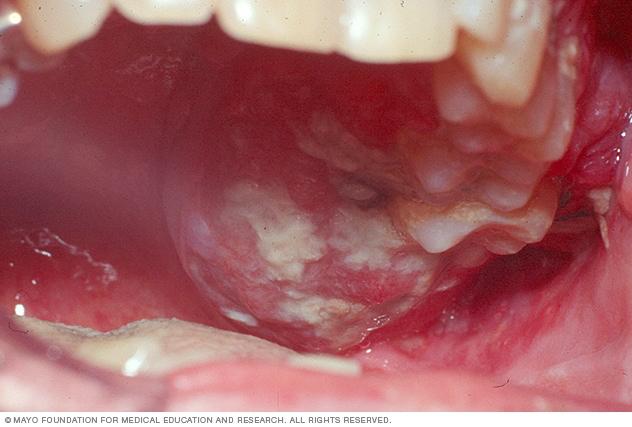
Oral Cancer: A Medical Insight into Mouth Tumors
Mouth cancer
What is mouth cancer? A Mayo Clinic expert explains
Learn more about mouth cancer, also called oral cancer, from oncologist Katharine Price, M.D.
Mouth cancer is a growth of cells that starts in the mouth. Mouth cancer can happen in any of the parts that make up the mouth.
Mouth cancer can occur on the:
- Lips.
- Gums.
- Tongue.
- Inner lining of the cheeks.
- Roof of the mouth.
- Floor of the mouth.
The mouth also is called the oral cavity. Cancer that happens in the mouth is sometimes called oral cancer or oral cavity cancer.Mouth cancer is one of several cancers that are considered to be types of head and neck cancer. Mouth cancer and other head and neck cancers often have similar treatments.
Symptoms
- Lip cancer
- Lip cancer
- Enlarge image
- Mouth cancer
- Mouth cancer — red sore
- Enlarge image
Signs and symptoms of mouth cancer may include:
- A lip or mouth sore that won't heal.
- A white or reddish patch on the inside of the mouth.
- Loose teeth.
- A growth or lump inside the mouth.
- Mouth pain.
- Ear pain.
- Difficult or painful swallowing.
Causes
It's not always clear what causes mouth cancer. This cancer starts as a growth of cells in the mouth. It most often starts in cells called squamous cells. These are flat, thin cells that line the lips and the inside of the mouth. Most oral cancers are squamous cell carcinomas. Mouth cancer happens when cells on the lips or in the mouth develop changes in their DNA. A cell's DNA holds the instructions that tell the cell what to do. In healthy cells, the DNA tells the cells to grow and multiply at a set rate. The DNA also tells the cells to die at a set time.
In cancer cells, the DNA changes give different instructions. The changes tell the cancer cells to grow and multiply quickly. Cancer cells can keep living when healthy cells would die. This causes too many cells.
The cancer cells might form a mass called a tumor. The tumor can grow to invade and destroy healthy body tissue. In time, the cancer cells can break away and spread to ther parts of the body. When cancer spreads, it's called metastatic cancer.
Risk factors
Factors that can increase the risk of mouth cancer include:
Using tobacco
All forms of tobacco increase the risk of mouth cancer. This includes cigarettes, cigars, pipes, chewing tobacco and snuff.
Drinking alcohol
Frequent and heavy drinking increases the risk of mouth cancer. Using alcohol and tobacco together increases the risk even more.
Excessive sun exposure to the lips
Ultraviolet light from the sun and tanning lamps increases the risk of lip cancer.
Being exposed to human papillomavirus
Human papillomavirus, also called HPV, is a common virus that's passed through sexual contact. For most people, it causes no problems and goes away on its own. For others, it causes changes in the cells that can lead to many types of cancer, including mouth cancer.
A weakened immune system
If the body's germ-fighting immune system is weakened by medicines or illness, there might be a higher risk of mouth cancer. People with a weakened immune system include those taking medicines to control the immune system, such as after an organ transplant. Certain medical conditions, such as infection with HIV, also can weaken the immune system.
Prevention
There's no proven way to prevent mouth cancer. However, you may reduce your risk of mouth cancer if you:
Don't use tobacco
If you don't use tobacco, don't start. If you currently use tobacco of any kind, talk with your healthcare team about strategies to help you quit.
Limit alcohol intake
If you choose to drink alcohol, do so in moderation. For healthy adults, that means up to one drink a day for women and up to two drinks a day for men.
Avoid excessive sun exposure to your lips
Protect the skin on your lips from the sun by staying in the shade when possible. Wear a broad-brimmed hat that shades your entire face, including your mouth. Apply a sunscreen lip product for sun protection.
Consider the HPV vaccine
Receiving a vaccination to prevent HPV infection may reduce your risk of HPV-related cancers, such as mouth cancer. Ask your healthcare team whether the HPV vaccine is appropriate for you.
Have regular health and dental exams
During your appointments, your dentist, doctor or other member of your healthcare team can check your mouth for signs of cancer.
Trending Articles
-

MyoPlus Team Engages in a Knowledge Exchange Session with the Experts at Fortis Escort Heart Institute, New Delhi
09 July,2026
-

When Do Babies Start to Recognize and Remember Their Mothers After Delivery?
01 September,2025
-
Polycystic Ovary Disorder
01 September,2025
-
PCOS: Polycystic Ovary Syndrome
01 September,2025
-
Ovary Cysts: Understanding the Condition
01 September,2025
-

Vaginal Infections: Causes and Risk Factor
01 September,2025
-

Pre-Delivery Precautions for a Smooth Birth Experience
31 August,2025
-

Post-Delivery Precautions for a Smooth Recovery
31 August,2025
-

Pre-Birth Movement Precautions for Women
31 August,2025
-

Rest and Recovery After Giving Birth
31 August,2025
Book Appointment
Top Doctors





Dr. Gaurav Rathore
Consultant
Orthopedic and Joint Replacement Surgeons
 Book Appointment
View Profile
Book Appointment
View Profile