Overview of Blood Cancers: Leukemia, Lymphoma, Myeloma, and More
Overview of Blood Cancers: Leukemia, Lymphoma, Myeloma, and More
Blood Cancer Symptoms and Diagnosis
People who have blood cancers — like leukemia, lymphoma, and multiple myeloma — value the advanced diagnostics that UPMC Hillman Cancer Center offers. Our blood cancer experts use a team approach to your care. They have extensive training in diagnosing and treating blood cancers.
These include five distinct disease types:
- Leukemia.
- Lymphoma.
- Myelodysplastic syndromes (MDS).
- Myeloproliferative disorder (MPD).
- Multiple myeloma.
What these diseases have in common is that most start in the bone marrow. This soft, spongy tissue found inside most bones is where blood cells form.
Blood Cancer Symptoms
While each type of blood cancer is different, they can share some common symptoms and signs.Some people with blood cancer may not have any symptoms until the disease has advanced. Or they may also mistake the symptoms for a severe cold or flu.
Some common blood cancer symptoms include:
- Coughing or chest pain. Possible cause is a buildup of abnormal blood cells in your spleen.
- Frequent infections. Possible cause is not enough white blood cells to fight off routine pathogens.
- Fever or chills. Possible cause is not enough white blood cells, leading to more frequent infections.
- Unexplained rash, bruising, or bleeding. Possible cause is not enough platelets, which are the cells that help the blood to clot.
- Itchy skin. Possible causes remain unknown.
- Loss of appetite or nausea. Possible cause is a buildup of abnormal blood cells in your spleen so that it presses on your stomach.
- Night sweats. Possible causes remain unknown.
- Persistent weakness and fatigue. Possible cause is not enough red blood cells (anemia).
- Shortness of breath. Possible cause is anemia.
- Swollen, painless lymph nodes in the neck, armpits, or groin. Possible cause is a build-up of abnormal white blood cells in your lymph glands.
When to See a Doctor
Since many early cancer symptoms are not very specific, it can be hard to know when you should feel worried. But early diagnosis can lead to earlier, more effective treatment, so don't delay.
You should see your doctor if any blood cancer symptoms last more than a couple weeks without improving. Some people worry about “bothering" their doctor if they do have just a cold or flu. But your doctor would much rather see you promptly to make that diagnosis.
Blood Cancer Diagnosis and Staging
- Your blood cancer care team will conduct tests to classify the type and stage of your blood cancer.
- Diagnosis and staging often happen at the same time.
- Tests to diagnose blood cancer
- Tests and procedures to diagnose blood cancers may include:
Blood tests.
Bone marrow tests.
Imaging tests — CT scan, PET scan, and X-ray.
Physical exam.
Surgical lymph node removal (to use in staging).
Staging blood cancer
- Staging is a process that tells the spread and severity of cancer. It lets each member of your care team know the exact type, location, and spread of the cancer.
- Doctors stage solid tumors (like lung cancer or breast cancer) by measuring tumor size and disease spread. But blood cancers are different.
- Each type of blood cancer uses its own staging system.
- Your doctor will explain how they decide the stage of your blood cancer.
In general, blood cancer staging looks at:
- Blood cell counts, including the number of healthy cells.
- The size and number of cancer cells.
- Genetic mutations in the cancer cells.
- The presence of cancer cells in other organs.
- Bone damage (with leukemia and multiple myeloma).
- Enlarged liver or spleen.
- Doctors also assign a grade to non-Hodgkin lymphomas. Grading helps understand the cancer's growth patterns and aggressiveness.
Lymphomas can be:
- Low grade: slow-growing or indolent.
- Intermediate grade: moderate growth rate.
- High grade: fast-growing or aggressive.
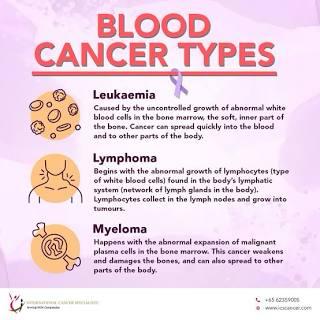
The primary types of blood cancer are Leukemia, affecting white blood cells, Lymphoma, affecting the lymphatic system (lymph nodes), and Myeloma, a cancer of plasma cells in the bone marrow. More broadly, doctors classify blood cancers into five main types: Leukemia, Lymphoma, Multiple Myeloma, Myelodysplastic Syndromes (MDS), and Myeloproliferative Disorders (MPD), which can be either fast-growing (acute) or slow-growing (chronic).
Here are the main types of blood cancer:
Leukemia: Cancer of the white blood cells, which are responsible for fighting infections. Leukemia can be acute (fast-growing, often affecting immature cells) or chronic (slower-growing, affecting more mature cells).
It is a common form of childhood cancer.
Lymphoma: Cancer that affects the lymphatic system, which is a part of the immune system.
The two main types are Hodgkin lymphoma and Non-Hodgkin lymphoma.
It is the most common form of blood cancer in adults.
Myeloma: Also known as multiple myeloma, this cancer affects plasma cells, a type of white blood cell that produces antibodies to fight infection.
These abnormal plasma cells can damage bones and impair the body's ability to fight off infections.
Myelodysplastic Syndromes (MDS): A group of blood cancers affecting the bone marrow, where blood cells are produced.
Myeloproliferative Disorders (MPD): A diverse group of blood cancers involving the overproduction of abnormal blood cells.
Trending Articles
-

MyoPlus Team Engages in a Knowledge Exchange Session with the Experts at Fortis Escort Heart Institute, New Delhi
09 July,2026
-

When Do Babies Start to Recognize and Remember Their Mothers After Delivery?
01 September,2025
-

Polycystic Ovary Disorder
01 September,2025
-

PCOS: Polycystic Ovary Syndrome
01 September,2025
-

Ovary Cysts: Understanding the Condition
01 September,2025
-

Vaginal Infections: Causes and Risk Factor
01 September,2025
-

Pre-Delivery Precautions for a Smooth Birth Experience
31 August,2025
-

Post-Delivery Precautions for a Smooth Recovery
31 August,2025
-

Pre-Birth Movement Precautions for Women
31 August,2025
-

Rest and Recovery After Giving Birth
31 August,2025
Book Appointment
Top Doctors





Dr. Gaurav Rathore
Consultant
Orthopedic and Joint Replacement Surgeons
 Book Appointment
View Profile
Book Appointment
View Profile